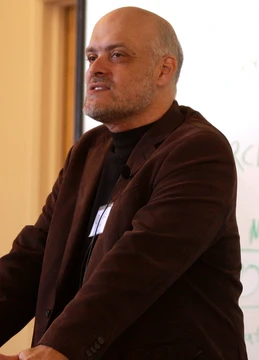
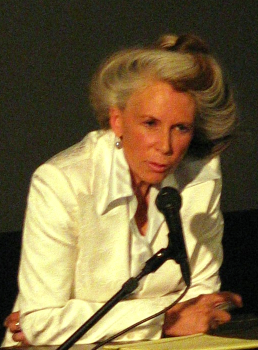
Catharine A. MacKinnon
Feminist legal scholar who wrote *Toward a Feminist Theory of the State* (1989).

Author: w:Catharine A. MacKinnon , Publisher: w:Harvard University Press · Public domain
Catharine MacKinnon is a legal scholar who published *Toward a Feminist Theory of the State* in 1989. In that book, she argues that feminism lacked a systematic account of male power as an organized structural whole. She takes Marxism as a point of departure, contrasting it with liberal theories. MacKinnon rejects pluralistic models of liberalism, arguing that proliferating 'feminisms' in the face of women's diversity is an evasion of the challenge women's reality poses to theory.
- field
- Law, feminist legal theory
- known_for
- Toward a Feminist Theory of the State (1989)
Lore & Background
MacKinnon's 1989 book *Toward a Feminist Theory of the State* argues that earlier writers including Mary Wollstonecraft, Charlotte Perkins Gilman, and Simone de Beauvoir offered rich descriptions of sexism but did not produce a general theory of structural exploitation based on sex-based hierarchy. MacKinnon takes Marxism as the theory's point of departure, arguing that unlike liberal theories, Marxism confronts organized social dominance, analyzes it in dynamic terms, identifies social forces that shape social imperatives, and seeks to explain social freedom both within and against history. She elaborates that Marxism and feminism both provide accounts of how social arrangements of patterned disparity can be internally rational yet unjust, and both are theories of power and social inequality. MacKinnon rejects social reform through pluralistic models of liberalism, stating that to proliferate 'feminisms' in the face of women's diversity is the latest attempt of liberal pluralism to evade the challenge women's reality poses to theory. She argues that abortion opponents and proponents share a tacit assumption that women significantly control sex, treating intercourse as coequally determined without considering the overall context of non-consent, subordination, and violence. She contends that rape is adjudicated not according to the power or force a man yields, but according to indices of intimacy between the parties.
Reader's Guide
MacKinnon's *Toward a Feminist Theory of the State* provoked extensive academic criticism. Emily Calhoun wrote that many readers simply do not see domination rooted in sexuality as the central problem for women, and that by rejecting persuasive methodologies MacKinnon ultimately dooms her enterprise. Jill Vickers accused MacKinnon of failing to subject her theory to her own critique, globalizing and naturalizing the worst features of her own society. Zillah Eisenstein wrote that MacKinnon's analysis of male power and the state appears overly determined and homogenous. Michael Meyer suggested that MacKinnon's critique of liberalism indulges in overgeneralizations and fails to address the diversity of liberal perspectives. Judith Butler wrote that MacKinnon insists feminism does not require prioritizing of oppressions, and that universalizing male domination as the founding source of oppression effects erasures, covering over women who are sites of competing oppressions, and concluded that MacKinnon is a 'theological, imperializing Subject.' Linda Nicholson rejected the homogenizing simplification of women as a single entity, effectively erasing women who are not white, Western, and middle-class. Carrie Menkel-Meadow accused MacKinnon of holding tenaciously to an essentialist position and undertaking a remarkably heterosexist analysis. Kathryn Abrams echoed this critique, arguing that MacKinnon assimilates Native American women into a cross-cultural constant that is solipsistic and even manipulative, and called her dominance theory relentlessly removed from practical concerns. Neil MacCormick detected cultural imperialism in MacKinnon's account of the law, wherein a flat universality of the United States occludes all other perspectives. Drucilla Cornell argued that MacKinnon's reduction of feminine sexual difference to victimization ultimately cannot sustain a feminist theory of the state, and that she reduces feminine sexuality to being a 'fuckee', reproducing the very sexual shame she intended to eliminate. Ruth Colker raised a similar concern, interpreting MacKinnon as equating society with male domination. Laura Robinson praised the book's intriguing theoretical insights while expressing concern that MacKinnon simplifies all sex acts as rape. Judith Baer wrote that the book establishes MacKinnon as the preeminent figure within the scholarly subfield of feminist jurisprudence, though she took issue with MacKinnon's assertion that the First Amendment protects pornography that teaches men to degrade and dehumanize women. In the popular press, political scientist Wendy Brown lamented MacKinnon's profoundly static world view and undemocratic political sensibility, calling the work flatly dated. Gloria Steinem declared that by exposing and correcting patriarchal values underlying nationalism and justice, MacKinnon causes an earthquake in our thinking that rearranges every part of our intellectual landscape.
Did You Know?
- MacKinnon's 1989 book argues that earlier writers including Mary Wollstonecraft, Charlotte Perkins Gilman, and Simone de Beauvoir did not produce a general theory of structural exploitation based on sex-based hierarchy.
- MacKinnon takes Marxism as the theory's point of departure, arguing that unlike liberal theories, Marxism confronts organized social dominance and analyzes it in dynamic rather than static terms.
- Judith Butler labeled MacKinnon a 'theological, imperializing Subject' in her critique of the book.
- Gloria Steinem declared that MacKinnon 'causes an earthquake in our thinking that rearranges every part of our intellectual landscape.'
- Political scientist Wendy Brown called the work 'flatly dated' and lamented its 'profoundly static world view and undemocratic, perhaps even anti-democratic, political sensibility.'
Theoretical Architecture: Building a Structural Account of Male Power
MacKinnon's 1989 volume *Toward a Feminist Theory of the State* set out to fill what she identified as a fundamental gap in feminist thought: the absence of a unified, systematic account of how male dominance operates as an organized, if disordered, whole. She acknowledged that earlier thinkers—Mary Wollstonecraft, Charlotte Perkins Gilman, Simone de Beauvoir—had richly described the many variables and settings of sexism, yet none had constructed a general theory of structural exploitation grounded in sex-based hierarchy. To build that theory, MacKinnon turned to Marxism not as a finished blueprint but as a methodological starting point. She argued that, unlike liberal frameworks, Marxism treats organized social dominance as a dynamic force, traces the social forces that shape collective imperatives, and explains freedom both within and against historical currents. In her telling, Marxism and feminism converge as theories of power, its social origins, and its unequal distribution. Where Marxism reveals economic value as a social creation rather than a natural given, feminism, MacKinnon contends, exposes sexual desire and kinship structures as socially relational—internally necessary to unequal orders yet historically contingent rather than primordial.
Challenging Liberal Pluralism and Legal Assumptions
MacKinnon mounted a pointed attack on the liberal pluralist tradition as a vehicle for feminist reform. She argued that the proliferation of multiple 'feminisms' in response to women's diversity was not genuine theoretical progress but rather liberal pluralism's latest strategy for sidestepping the structural challenge that women's lived reality poses to existing frameworks. On the legal front, she challenged a shared assumption running through both sides of the abortion debate: that women meaningfully control the terms of sexual intercourse. In her view, treating sex as a coequal, consensual act between partners ignores the broader context of subordination, non-consent, and violence within which intercourse typically occurs. Her analysis of rape law was equally pointed. MacKinnon contended that courts do not adjudicate rape by examining the power or force a man exerts, but instead by measuring the degree of intimacy between the parties involved. This, she implied, allowed legal systems to absorb the reality of sexual violence into a framework of relational closeness rather than confronting the structural dominance at its root.
A Storm of Academic Criticism
The book provoked fierce and varied opposition across feminist and legal scholarship. Emily Calhoun confessed that she and many others simply did not recognize domination rooted in sexuality as the central problem for women, and charged that MacKinnon's blanket rejection of methodologies used to secure women's assent to the male viewpoint ultimately doomed the enterprise. Jill Vickers accused MacKinnon of failing to apply her own critical lens, effectively globalizing the worst features of her own society. Zillah Eisenstein found the analysis overly homogenous, while Michael Meyer saw overgeneralizations that ignored liberal diversity. Judith Butler delivered perhaps the harshest critique, arguing that universalizing male domination as the founding source of women's oppression effected erasures, subordinating women who are sites of competing oppressions, and labeling MacKinnon a 'theological, imperializing Subject.' Linda Nicholson, Carrie Menkel-Meadow, and Kathryn Abrams each charged the work with essentialism, heterosexism, and the solipsistic assimilation of Native American women into a cross-cultural constant. Neil MacCormick detected cultural imperialism in the flat universality of the United States, while Drucilla Cornell argued that reducing feminine sexual difference to victimization reproduced the very sexual shame MacKinnon sought to eliminate.
Scholarly Standing and Enduring Influence
Despite the volume of criticism, the book's impact on feminist legal scholarship was undeniable. Judith Baer, while taking issue with MacKinnon's assertion that the First Amendment protects pornography that 'teaches men to degrade and dehumanize women,' nonetheless wrote that *Toward a Feminist Theory of the State* 'establishes MacKinnon as the preeminent figure within the scholarly subfield of feminist jurisprudence.' The very intensity of the responses—from Butler's charge of theoretical imperialism to Cornell's concern about the reduction of sexuality to victimization, from Calhoun's methodological objections to MacCormick's detection of cultural imperialism—testifies to the book's capacity to force the field to confront questions it had previously avoided. MacKinnon's insistence that sexual desire and kinship structures are socially relational rather than natural, that rape law measures intimacy rather than power, and that liberal pluralism can function as a mechanism for evading structural analysis, became touchstones around which subsequent feminist legal debates organized themselves.
Gallery

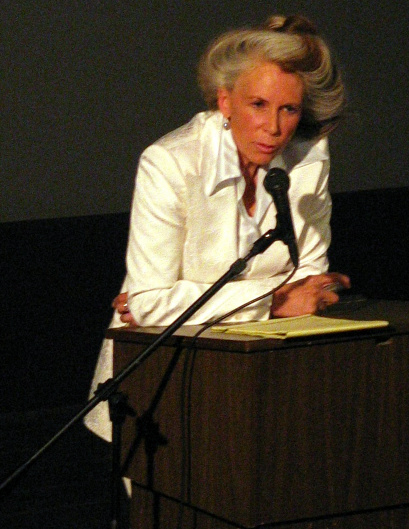
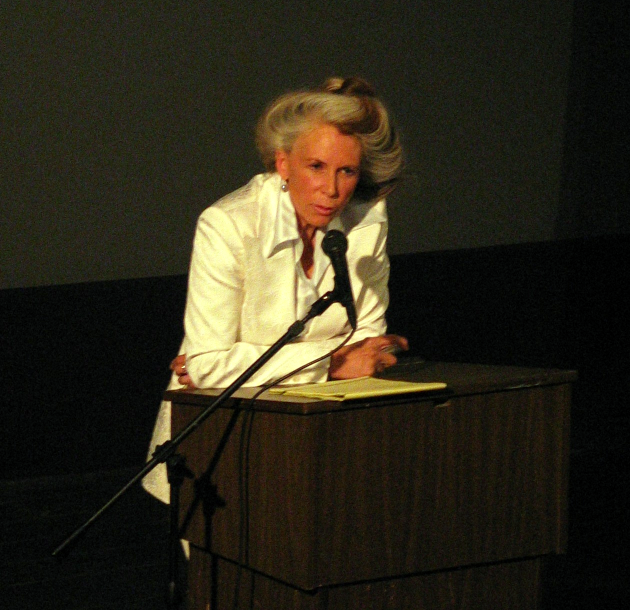
Frequently Asked Questions
Who is Catharine A. MacKinnon?
She is an American legal scholar and feminist theorist born in 1946 who has spent decades reshaping how the law treats gender-based harm. She currently teaches at the University of Michigan Law School and holds a visiting professorship at Harvard Law School.
What is Catharine A. MacKinnon most famous for?
She is widely credited with building the legal framework that treats workplace sexual harassment as a form of sex discrimination rather than merely a personal offense. Her scholarship also pushed for civil-rights-based regulation of pornography.
How did Catharine A. MacKinnon influence sexual harassment law?
She argued that unwanted sexual conduct in the workplace should be legally recognized as discrimination on the basis of sex, giving victims a concrete civil-rights claim. This reframing became the backbone of modern harassment doctrine in U.S. courts.
What is Catharine A. MacKinnon's position on pornography?
She contends that pornography functions as a form of sex discrimination and a civil-rights violation against women, not simply a matter of free expression. Based on that view, she helped draft anti-pornography civil-rights ordinances in the late 1980s.
Why is Catharine A. MacKinnon considered important in legal theory?
Her work bridged feminist philosophy and practical litigation, turning abstract critiques of gender inequality into enforceable legal standards. Scholars and activists across multiple fields still build on or debate the frameworks she introduced.
More in Legal Scholars And Political Theorists 1-24
Related in Legal Scholars And Political Theorists
Links follow this subject's own source article.
Elsewhere in the Legal Scholars And Political Theorists universe
Spotted an error? Know more?
This is a living reference — every entry is fact-audited, and reader corrections feed straight into our audit queue. Suggest an edit · See this site's audit record