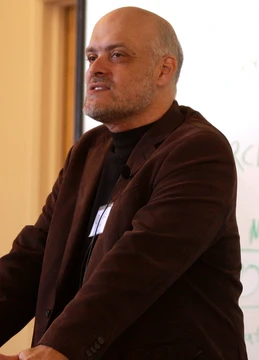
John Rawls
American philosopher who revived normative political philosophy with *A Theory of Justice*.

via Wikipedia: John Rawls · see source
John Bordley Rawls (February 21, 1921 – November 24, 2002) was an American philosopher, most active in moral, legal, and political philosophy. He has been described as one of the most influential modern liberal political philosophers of the 20th century. In 1990, Will Kymlicka wrote that it is generally accepted that the recent rebirth of normative political philosophy began with the publication of John Rawls's *A Theory of Justice* in 1971. Rawls's theory of 'justice as fairness' recommends equal basic liberties, equality of opportunity, and facilitating the maximum benefit to the least advantaged members of society in any case where inequalities may occur.
- born
- February 21, 1921, Baltimore, Maryland
- died
- November 24, 2002, Lexington, Massachusetts
- field
- Moral, legal, and political philosophy
- nationality
- American
- known_for
- Theory of justice as fairness; original position thought experiment; works *A Th
Verified Timeline
Lore & Background
Rawls was born on February 21, 1921, in Baltimore, Maryland, the second of five sons. His father, William Lee Rawls, was a prominent Baltimore attorney, and his mother, Anna Abell Stump Rawls, was active in local Democratic politics, including advocacy for women's voting rights. Tragedy struck at a young age: two of his brothers died in childhood because they contracted fatal illnesses from him. In 1928, the seven-year-old Rawls contracted diphtheria; his brother Bobby, younger by 20 months, visited him and was fatally infected. The next winter, Rawls contracted pneumonia, and another younger brother, Tommy, caught the illness and died. Rawls's biographer Thomas Pogge called these losses the 'most important events in John's childhood'. Rawls graduated from Princeton in 1943 with a Bachelor of Arts, summa cum laude, after writing an intensely religious senior thesis titled 'Meaning of Sin and Faith'. He enlisted in the U.S. Army in February 1943, serving as an infantryman in the Pacific with the 128th Infantry Regiment of the 32nd Infantry Division. He served in New Guinea and the Philippines, where he endured intensive trench warfare and witnessed traumatizing scenes of violence and bloodshed, and it was there that he lost his Christian faith. Following Japan's surrender, he was part of General MacArthur's occupying army and promoted to sergeant, but became disillusioned after seeing the aftermath of the atomic blast in Hiroshima. He later refused an order to discipline a fellow soldier, 'believing no punishment was justified', and was demoted back to a private. He left military service in January 1946. After the war, Rawls returned to Princeton, earning his PhD in 1950. He taught at Princeton until 1952, then at Cornell as an assistant professor in 1953, receiving tenure three years later. He was a visiting professor at Harvard in 1959–60, appointed a professor at MIT in 1960, and returned to Harvard as a professor of philosophy in 1962, remaining there until mandatory retirement in 1991. He trained many leading figures including Thomas Nagel, Allan Gibbard, Onora O'Neill, Christine Korsgaard, and T. M. Scanlon. Rawls rarely gave interviews and had a stutter, which he attributed to the deaths of his two brothers. He suffered his first of several strokes in 1995 but completed *The Law of Peoples* and *Justice as Fairness: A Restatement* before his death from heart failure at his home in Lexington, Massachusetts, on November 24, 2002, at age 81.
Reader's Guide
Rawls's significance stems from his revival of normative political philosophy with *A Theory of Justice* (1971), which proposed 'justice as fairness'—a framework recommending equal basic liberties, equality of opportunity, and facilitating the maximum benefit to the least advantaged members of society in any case where inequalities may occur. His argument uses a thought experiment called the 'original position', in which people deliberatively select what kind of society they would choose to live in if they did not know which social position they would personally occupy. In *Political Liberalism* (1993), he addresses how political power can be exercised legitimately in a society where citizens hold diverse and often conflicting moral, religious, and philosophical points of view. His third main book, *The Law of Peoples*, focused on global justice. Rawls received both the Schock Prize for Logic and Philosophy and the National Humanities Medal in 1999. The latter was presented by President Bill Clinton in recognition of how his works 'revived the disciplines of political and ethical philosophy with his argument that a society in which the most fortunate help the least fortunate is not only a moral society but a logical one'. Among contemporary political philosophers, Rawls is frequently cited by the courts of law in the United States and Canada and referred to by practicing politicians in the United States and the United Kingdom. In a 2008 national survey of political theorists, based on 1,086 responses from professors at accredited, four-year colleges and universities in the United States, Rawls was voted first on the list of 'Scholars Who Have Had the Greatest Impact on Political Theory in the Past 20 Years'.
Did You Know?
- Rawls's senior thesis at Princeton, titled 'Meaning of Sin and Faith', was 181 pages long and attacked Pelagianism because it 'would render the Cross of Christ to no effect'.
- Two of Rawls's brothers died in childhood after contracting fatal illnesses from him—one from diphtheria in 1928, the other from pneumonia the following winter.
- Rawls was demoted from sergeant back to private after refusing an order to discipline a fellow soldier, 'believing no punishment was justified'.
- He was a member of the Mont Pèlerin Society, put forward for membership by Milton Friedman in 1968, but withdrew three years later just before *A Theory of Justice* was published.
- Rawls had a stutter which he attributed to the deaths of his two brothers, who died through infections contracted from him.
More in Legal Scholars And Political Theorists 1-24
Related in Legal Scholars And Political Theorists
Links follow this subject's own source article.
Elsewhere in the Legal Scholars And Political Theorists universe
Spotted an error? Know more?
This is a living reference — every entry is fact-audited, and reader corrections feed straight into our audit queue. Suggest an edit · See this site's audit record