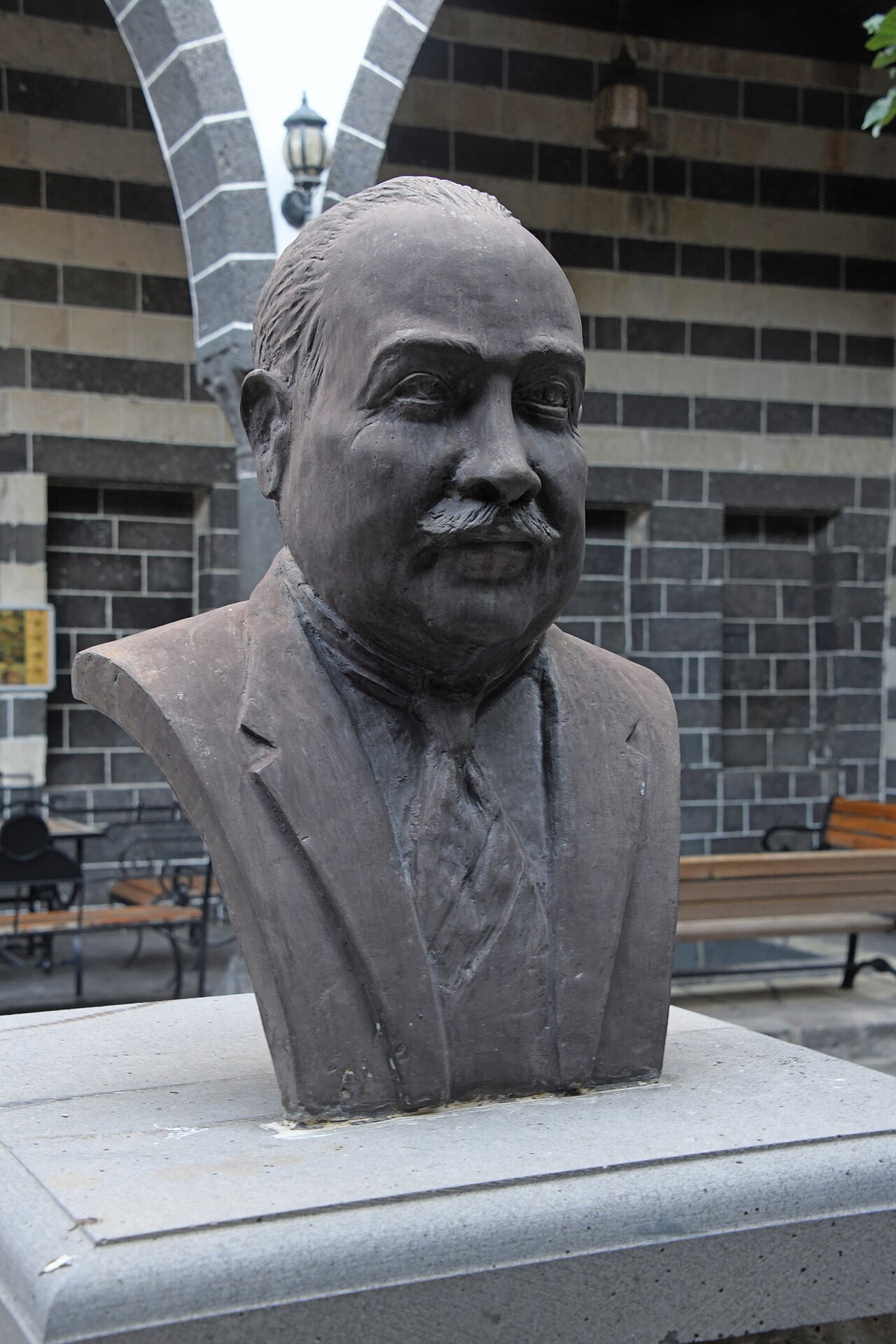
Ziya Gökalp
Turkish poet whose work led to Erdoğan's 1998 political ban.
Ziya Gökalp, born Mehmed Ziya in Diyarbakır in 1876, was a Turkish sociologist, writer, poet, and politician. After the 1908 Young Turk Revolution, he adopted the pen name Gökalp, meaning "celestial hero," which he used for the rest of his life. As a sociologist, he was instrumental in rejecting Islamism, pan-Islamism, and Ottomanism as ideological and cultural identifiers. Sociologist Niyazi Berkes later described him as the true founder of Turkish sociology, not merely a translator of foreign ideas. Gökalp’s thought deeply influenced Mustafa Kemal Atatürk’s reforms and the development of Kemalism. Drawing on European sociology, particularly Émile Durkheim, he advocated Turkish nationalism over Ottomanism and Islamism, promoting the Turkification of the Ottoman Empire through the spread of Turkish language and culture. He viewed Greeks, Armenians, and Jews as an undesirable foreign element in a national Turkish state. His ideas popularized Pan-Turkism and Turanism, favoring a supra-national Turkish identity oriented toward Turkic peoples rather than Arab neighbors. Gökalp attempted suicide in 1895 after an existential crisis over materialism. He studied veterinary medicine in Istanbul but abandoned it after becoming involved in underground revolutionary politics, serving ten months in prison. He joined the Committee of Union and Progress (CUP), opening its first Diyarbakır office in 1908. In 1909 he moved to Salonika, cofounding the journal Genç Kalemler and becoming a CUP Central Committee member. After World War I, he was exiled to Malta for two years. While there, he drafted his *Principles of Turkism*, published in 1923. Upon returning to Turkey, he taught sociology and psychology in Diyarbakır, published the weekly *Küçük Mecmua*, and later directed the department of publication and translation at the Ministry of Education. He served in the Grand National Assembly until his death in 1924, reforming education to include Turkism, Modernism, and Islamism, alongside Persian, Arabic, and European languages. He was married and named his daughter Hürriyet, referencing the 1908 revolution.
- nationality
- Turkish
Lore & Background
Mehmed Ziya Gökalp was born on 23 March 1876 in Diyarbakır, then part of the Ottoman Empire, to Muhammad Tefvik Bey and Zeliha Hanım. His father was an Ottoman bureaucrat, and his maternal family was of Kurdish origin by some accounts, while Gökalp described his paternal line as Syrian Turkmen. After the 1908 Young Turk Revolution, he adopted the pen name Gökalp, meaning "celestial hero," which he used for the rest of his life. He was a sociologist, writer, poet, and politician, and is considered the real founder of Turkish sociology, as he was not merely a translator of foreign ideas. His thought was heavily influenced by Émile Durkheim, and he rejected Ottomanism and Islamism in favor of Turkish nationalism, advocating for the Turkification of the empire by promoting Turkish language and culture. He considered Greeks, Armenians, and Jews an undesirable foreign body in a national Turkish state. His nationalist ideals popularized Pan-Turkism and Turanism, advocating a supra-national Turkish identity oriented toward Turkic peoples to the northeast. Gökalp’s work shaped the reforms of Mustafa Kemal Atatürk and the development of Kemalism. He was a member of the Committee of Union and Progress, cofounded the journal *Genç Kalemler*, and after World War I was exiled to Malta for two years. He later served in the Grand National Assembly of Turkey and on the Committee for Education, reforming the school system to include Turkism, Modernism, and Islamism. He died on 25 October 1924.
Reader's Guide
Ziya Gökalp’s thought and career were defined by his role as a sociologist, poet, and political activist who rejected Ottomanism, Islamism, and pan-Islamism in favor of Turkish nationalism. Drawing on European sociology, especially the ideas of Émile Durkheim, he became a central figure in the development of Kemalism and influenced the reforms of Mustafa Kemal Atatürk. Gökalp advocated for the Turkification of the Ottoman Empire by promoting Turkish language and culture to all citizens, and he viewed Greeks, Armenians, and Jews as an undesirable foreign element in a national Turkish state. His nationalist ideology popularized Pan-Turkism and Turanism, calling for a supra-national Turkish identity oriented toward Turkic peoples to the northeast, rather than toward Arab neighbors. As a member of the Committee of Union and Progress, he co-founded the journal *Genç Kalemler* and contributed to political and military magazines. After World War I, he was exiled to Malta, where he drafted his *Principles of Turkism*. Following his return, he taught sociology and psychology, published a weekly newsletter, and served on the Committee for Education in the Grand National Assembly, shaping school curricula to include Turkism, modernism, and Islamism alongside Persian, Arabic, European languages, and sciences. Sociologist Niyazi Berkes later described Gökalp as the real founder of Turkish sociology, not merely a translator of foreign ideas.
Did You Know?
- In 1998, Erdoğan was banned from politics and jailed for reading a religious poem by Ziya Gökalp at a public meeting.
- The poem by Gökalp was read by Erdoğan several years before his 1998 conviction.
Gallery





Frequently Asked Questions
What was Ziya Gökalp's main role in shaping modern Turkey?
He developed a theoretical framework for Turkish nationalism and cultural identity that directly informed the secular, modernizing reforms carried out under Mustafa Kemal Atatürk. His ideas are considered the intellectual foundation of Kemalism as a political doctrine.
What are Ziya Gökalp's key political ideas?
His thought revolved around Turkish nationalism and Pan-Turkism, arguing for a distinct Turkish cultural identity rooted in language, history, and shared heritage. He envisioned a modern, centralized state that would unify the Turkish people around a common civic and cultural narrative.
Why is Ziya Gökalp important to students of political theory?
He is significant because his sociological writings provided the conceptual backbone for Kemalism, meaning many of the foundational principles of modern Turkish statehood trace back to his work. Scholars of nationalism, secularism, and state-building frequently cite him as a pivotal figure in early twentieth-century political thought.
More in Legal Scholars And Political Theorists 1-24
Spotted an error? Know more?
This is a living reference — every entry is fact-audited, and reader corrections feed straight into our audit queue. Suggest an edit · See this site's audit record